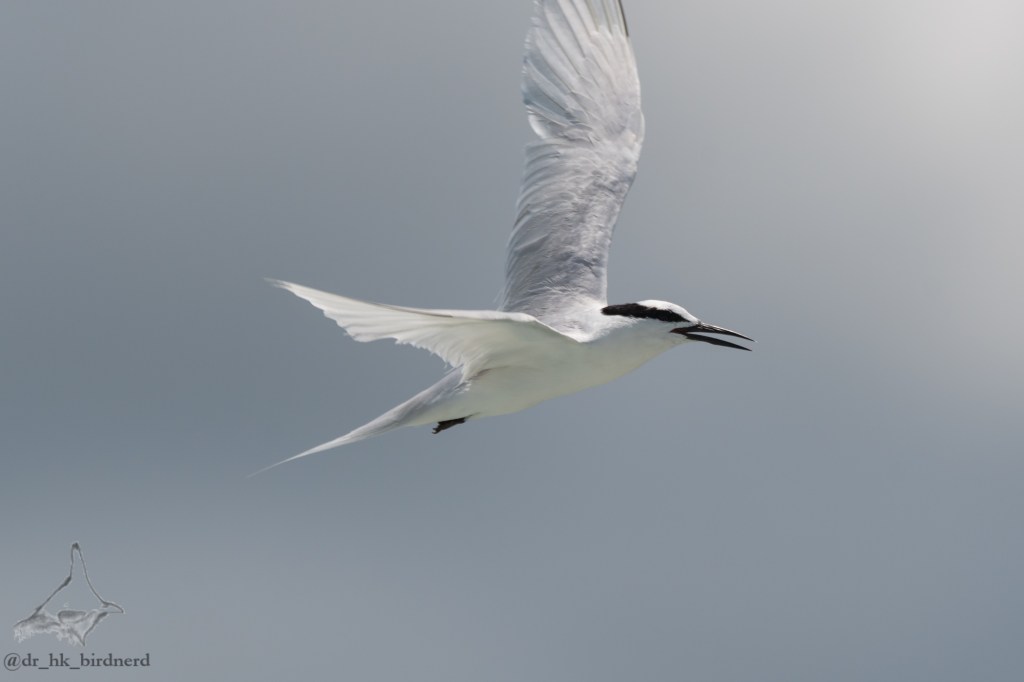
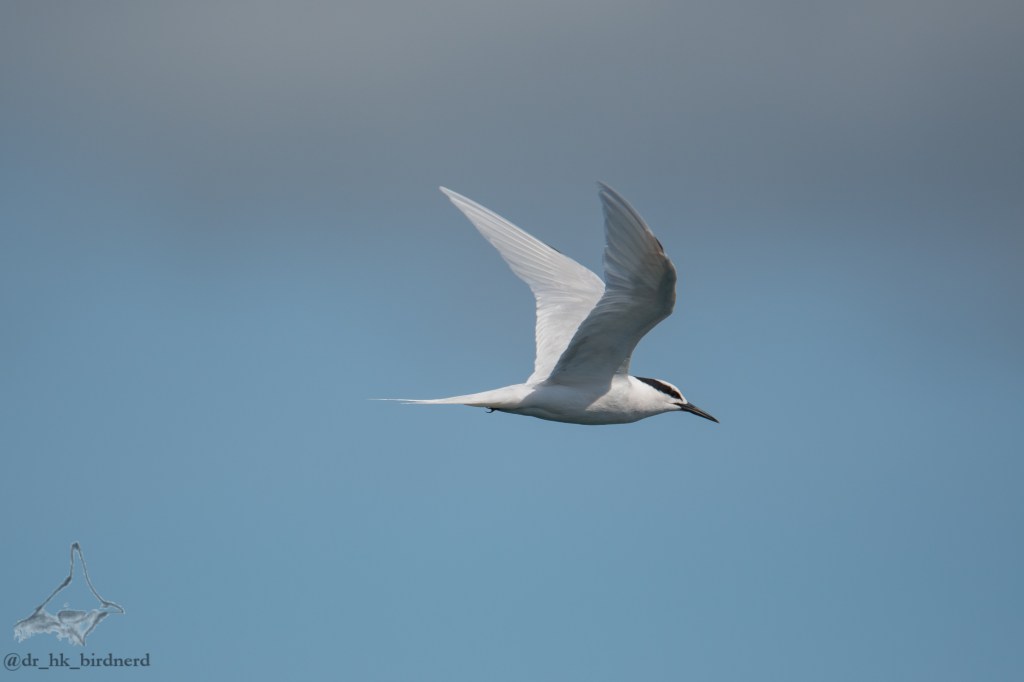
The black-naped terns (sterna sumatrana) is a member of the family of seabirds Laridae, which includes gulls, terns, skimmers, and noddies. They breed in Hong Kong primarily in August on the rocky coasts of various islands and outcrops.
The best way to see these birds is by boat—particularly by ferry, as the propeller stirs up the small fish they like to eat and so they will often follow the boat for food.
Black-naped terns are unique among terns being one of the only species aside from the snowy crowned tern that lacks a black cap for mating season.
They lay their eggs on bare rocks without nesting material and so there is a small chance that divers and fisherfolk who fish from the rocks may disturb tern nests or worse, so if you are hiking on any islands be careful of tern eggs!
Check out this post in my Hong Kong bird log for more information about this interesting seabird.
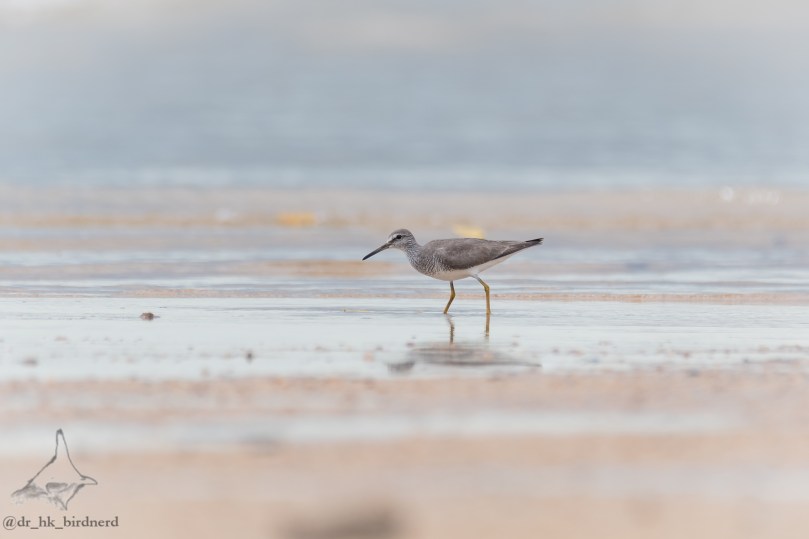
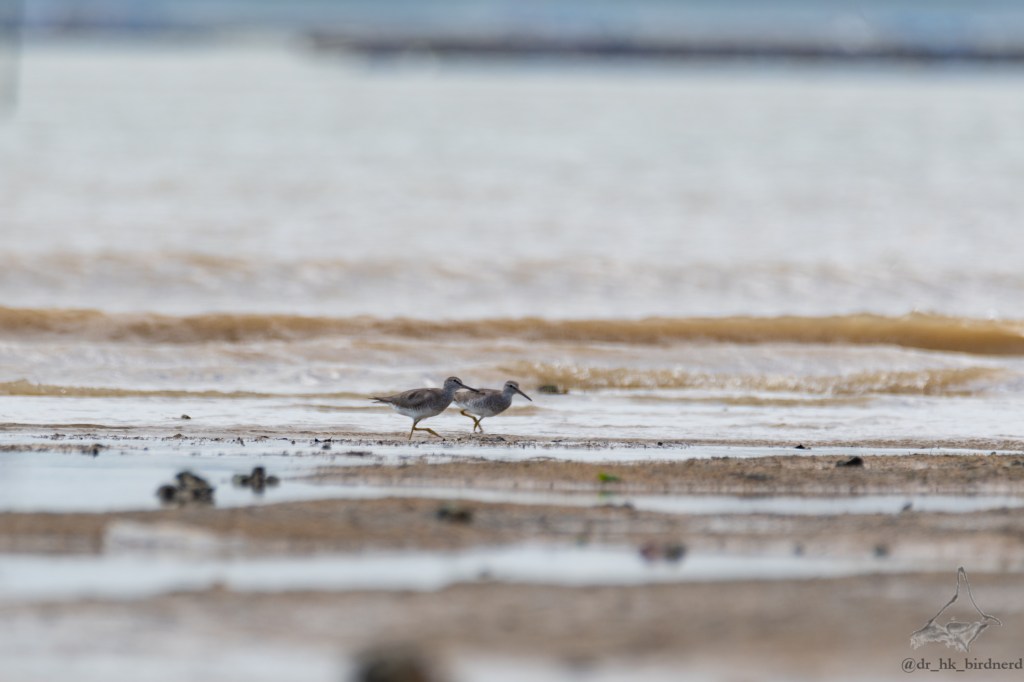
The grey-tailed tattler, also known as Polynesian tattler, is a species of shorebird that breeds in Siberia and migrates south along the coast to anywhere from south-eastern China to Austrailia and even New Zealand. Four or five came by in a group along the shore of Deep Bay during my trips on the 1st, 4th, and 6th of August (2020). Unlike their American counterparts, the wandering tattlers, the grey-tailed tattlers prefer open mudflats to rocky shorelines, making the Deep Bay flats a perfect sanctuary for travelers. However, it is still technically breeding season for them, which lasts until late August, so these are either on their way to their breeding grounds rather late, they’ve already bred and are on their way back south, or they failed to attract a mate and are simply vagrants.
The species is listed as nearly threatened due to the substantial decline in the adult population, with only 29,500 mature individuals estimated from 2016, but there may very well be fewer now. The main causes of their decline is of course habitat loss and pollution. These birds are currently being monitored by means of various tagging programs, so perhaps with more information, conservation efforts can be more effective. I haven’t yet seen one with a tag, though I do hope to someday so I can report it.
Concerning their behavior, I don’t really have much to say in terms of interesting observations, though it did seem like these waders were more interested in rest than in eating, unlike their plover counterparts, who were scuttling about and voraciously eating everything they could find on the sandbar. The few tattlers that flew in instead just wanted to relax by the shoreline and even in the water. I hadn’t ever seen a wader just hanging out in the wash!
The last week of July brought some substantial low pressure systems in from offshore, and seemed also to have brought some migrating waders. Mai Po marshes recorded many greater sand plovers, greenshanks, redshanks, and spoonbills, among others during the final days of July. So I decided to make a few trips to my usual spot on the shores of Deep Bay (Shenzhen Bay), to have a try. (Details are secret.) The variety here isn’t as good as what you can expect at Mai Po, but with a bit of luck and care, you can end up getting much closer to the birds, if you manage not to scare them off!
It seemed like the same group of birds were in town all week, in spite of weather differences. Various and at times severe storms earlier in the week eventually gave way to a subtropical ridge of high pressure that should stay for at least a few days. High tide has been peaking around midday, leaving the best time to try in the early afternoon. However, on the southern shores of Deep Bay, the summer sun can be brutal, and unfortunately as it lowers makes it more difficult for birding, so really the stormy days are best.
Upon first arriving, on the 1st, I spotted a black-winged kite. Their hunting strategy couldn’t be much more different from their larger cousins, the black kite. Like other kestrels, they hover in place rather than circling, watiing to divebomb some unsuspecting creature. Unlike other hovering birds, black winged kites cannot support themselves as they hover, so they must fly into the wind to keep afloat.
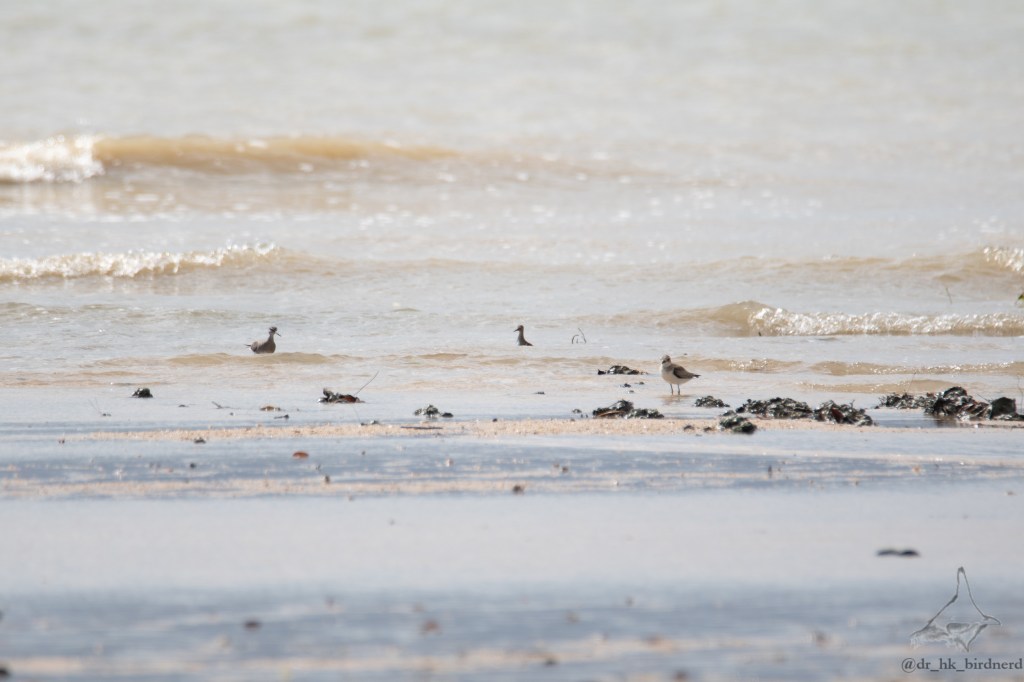
On the 1st, the four main species of wader we saw included 12 or so greater sand plovers, another dozen or so little ringed plovers, a four to five terek sandpipers, a ten or so grey-tailed tattlers, four or five common sandpipers, and three whimbrels. The tide was low, so by the time I noticed those birds they were already well out into the sandbar and had no interest in coming closer.
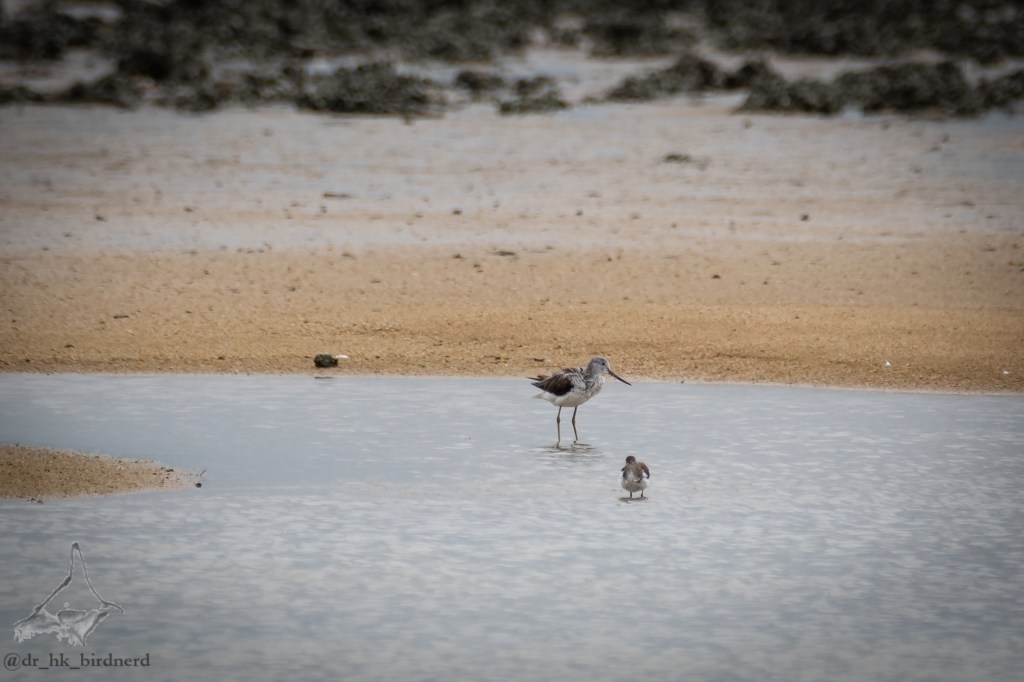
Common Greenshank
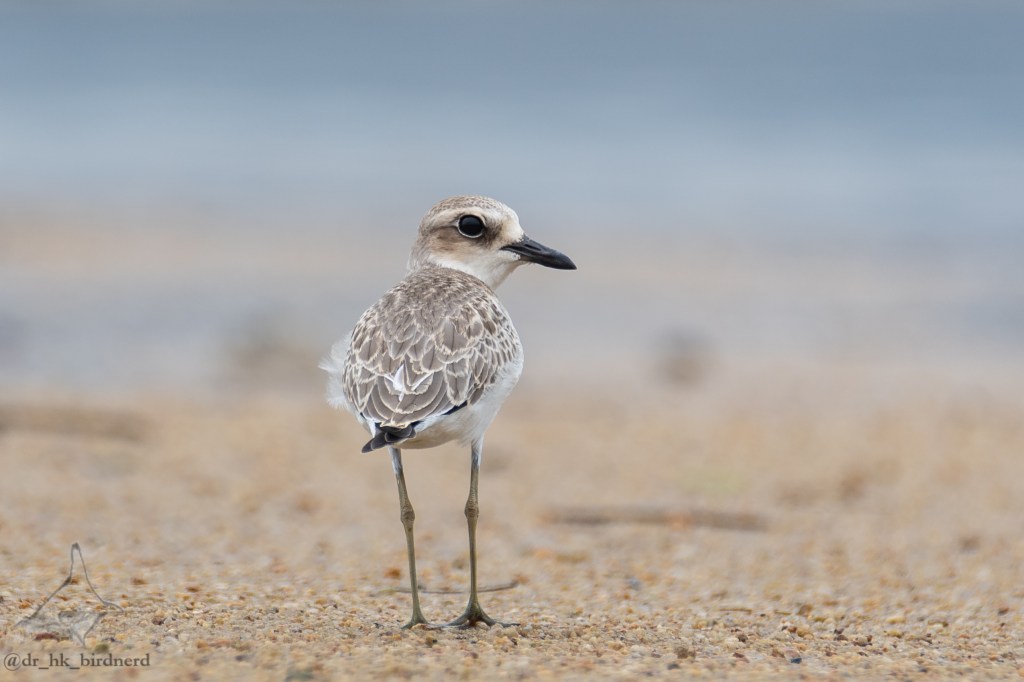
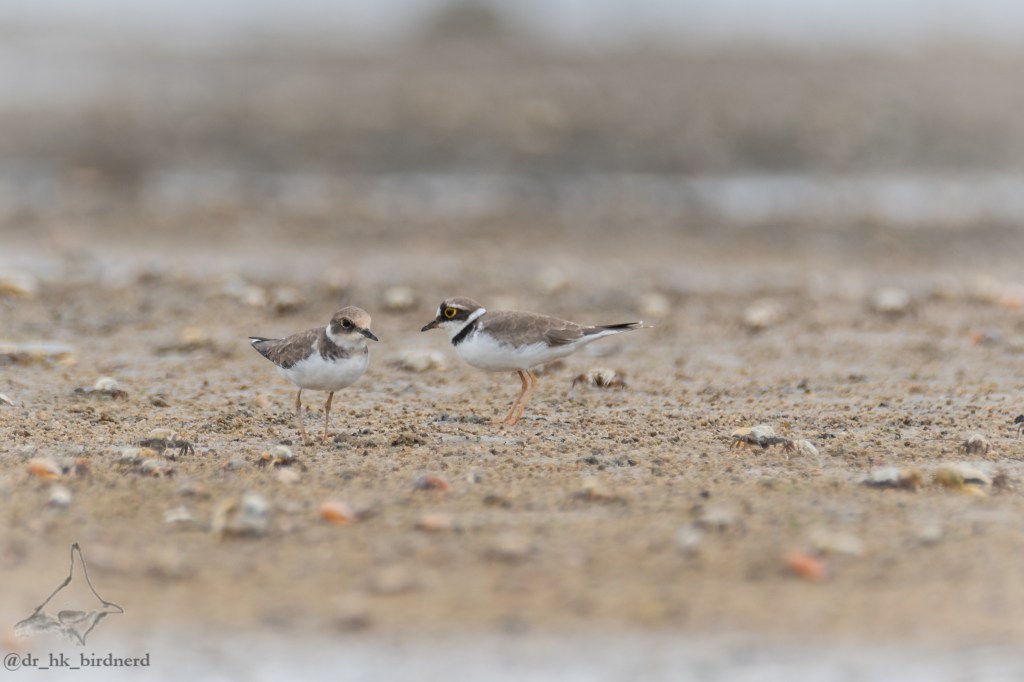
The plovers, on the other hand, were much more fearless, coming in close to check out the strange man trying to take their picture. I was able to get some decent photos of the little ringed plovers, which appeared to be a mixture of juvenile and adults, as well as the greater sand plover.
Stay tuned for more in-depth posts about the individual birds I managed to photo!
Little Ringed Plover (Charadrius dubius)Greater sand plover (Charadrius leschenaultii)
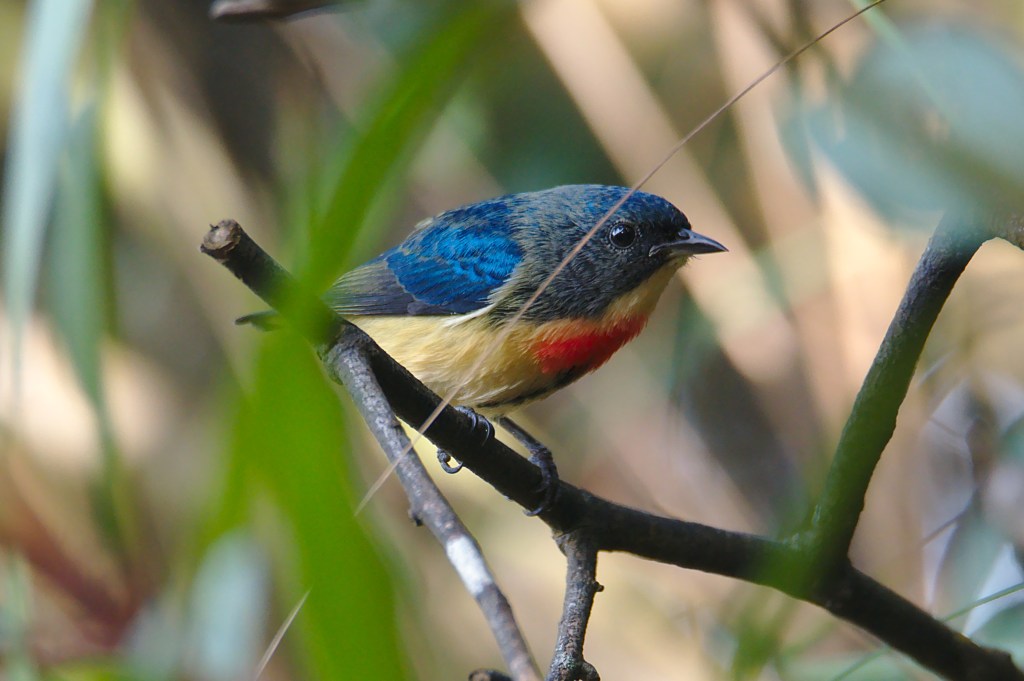
The fire-breasted flowerpecker is one of the most distinctive of all the flowerpeckers, being unusually strongly sexually dimorphic for the flowerpecker family. They play an important role in the dispersal of fruiting plants, feeding primarily on berries. Of the bird, John George Wood wrote in 1862:
… the Fire-breasted Myzanthe (Myzanthe ignipectus), a bird which is remarkable as being the smallest bird of India. So very small is this beautiful little bird, that an adult specimen is hardly two and a half inches in total length, and weighs only three and a half drachms. In its habits it is very like the Dicaeum, frequenting the tops of trees, and keeping itself well out of sight…
The Illustrated Natural History (1862)
Keeping itself “well out of sight” is indeed something true of this bird, as I have never seen it before in Hong Kong, and many fellow birders have not been able to record it. On its size, it is indeed very small, although I am not sure if it is actually the smallest bird in HK. Pallas’ leaf warbler and the fork-tailed sunbirds would be contenders for that title, I think.
This one was found at Lung Fu Shan on the morning of 4 January.
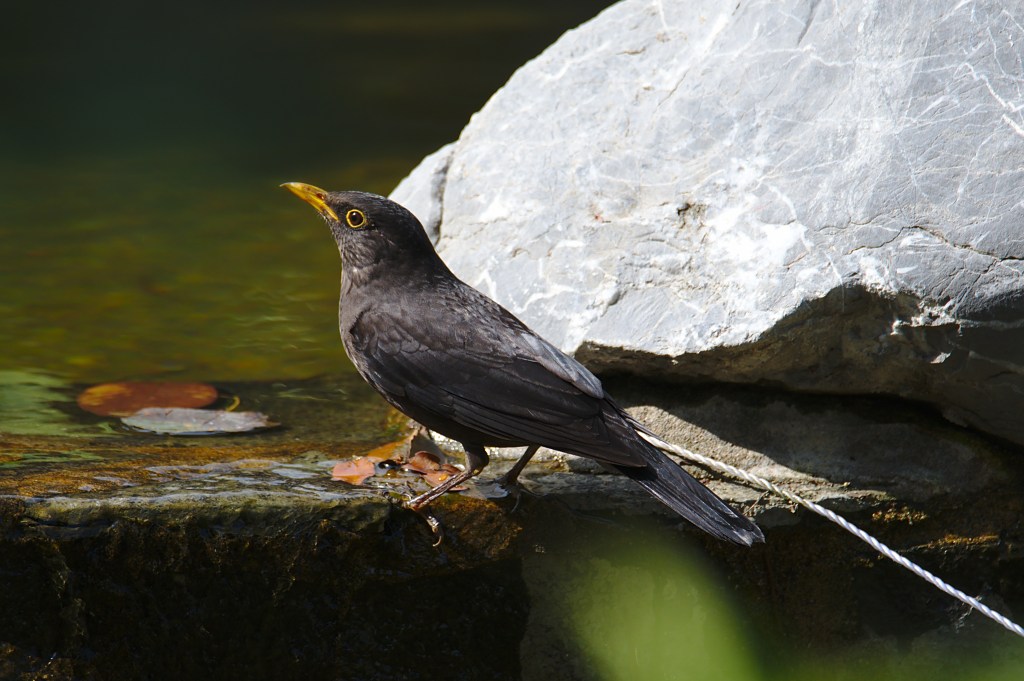
These lovely birds, though very common, are not so easy to photograph in Hong Kong. They are a species of true thrush. Unlike their widespread Eurasian colleagues, however, these birds tend not to sing as much in Hong Kong, and in fact I don’t think I’ve ever heard the “classic” blackbird song in Hong Kong. This one I found in Kowloon Walled City Park, where it dipped down to the stream for a drink.
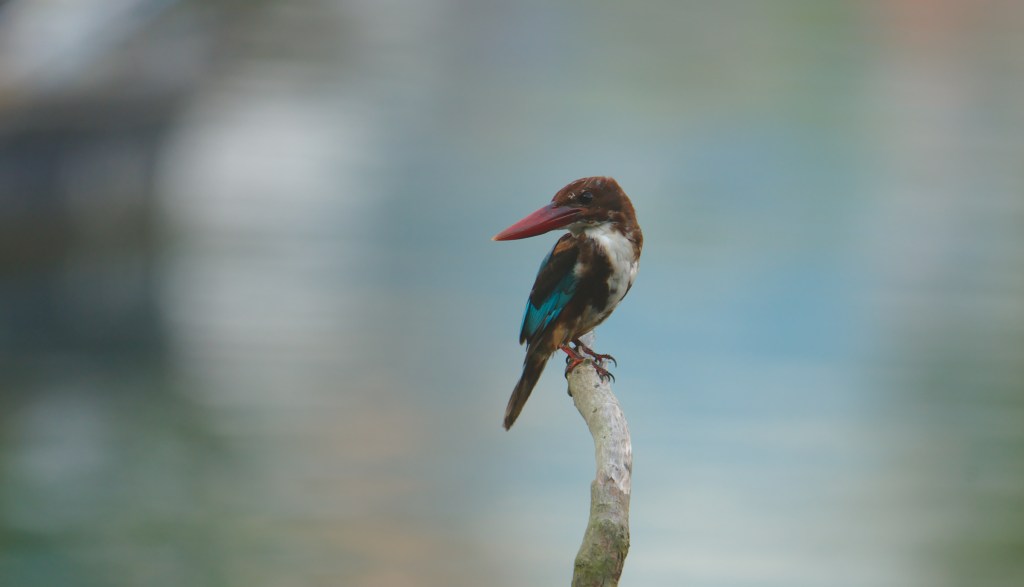
A few white breasted kingfishers have been hanging around a fishing cove in Tseung Kwan O in the mornings for the past few weeks, making for some very productive shooting.
I spotted this lovely on the trail up to the Mt. Davis youth hostel. It was perched on a tree that had fallen down and partially blocked the trail and I nearly scared it off as I walked up and didn’t notice it. Luckily though, I was able to approach quietly enough to get a very clear shot from the trail.













 Frank's Wildlife Photos